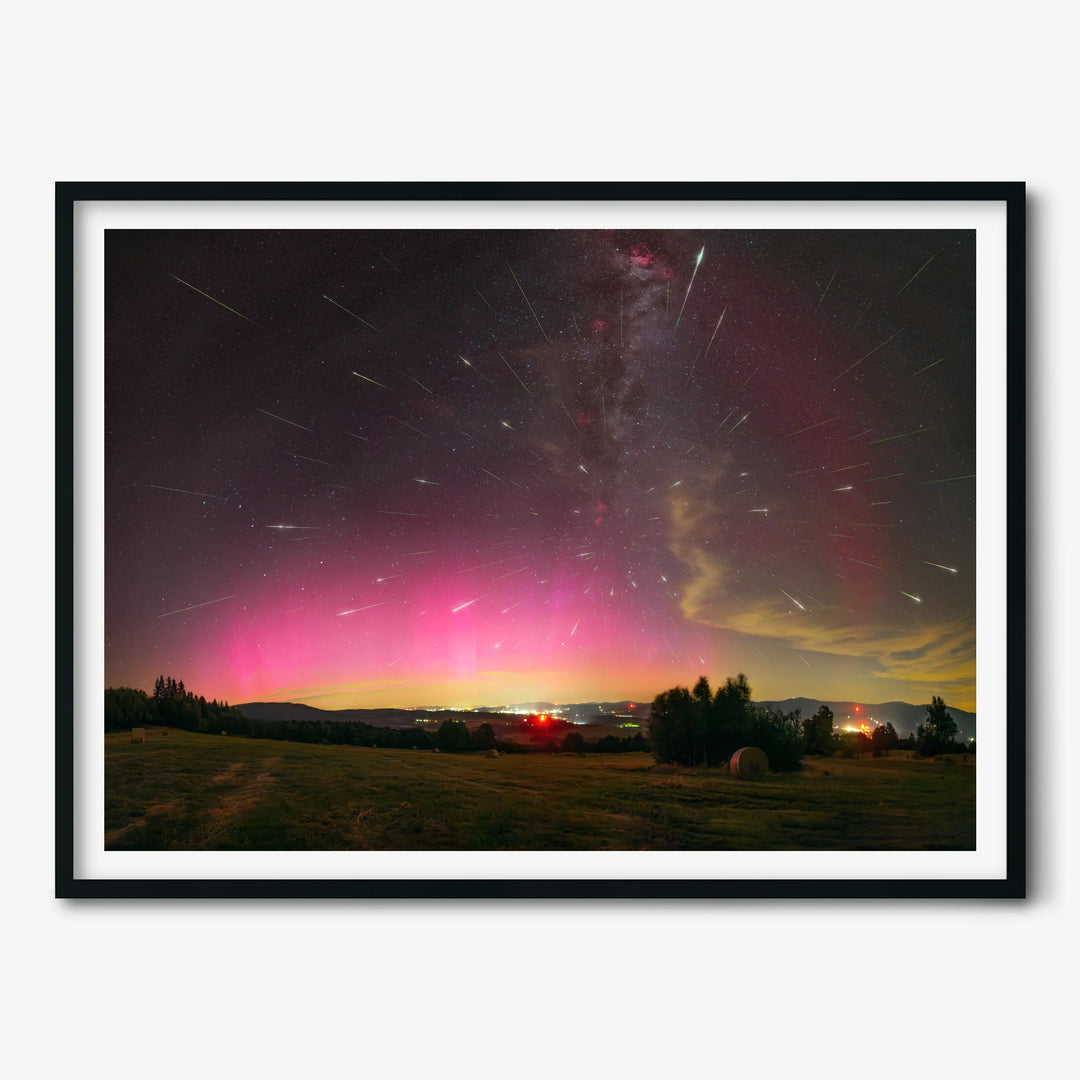
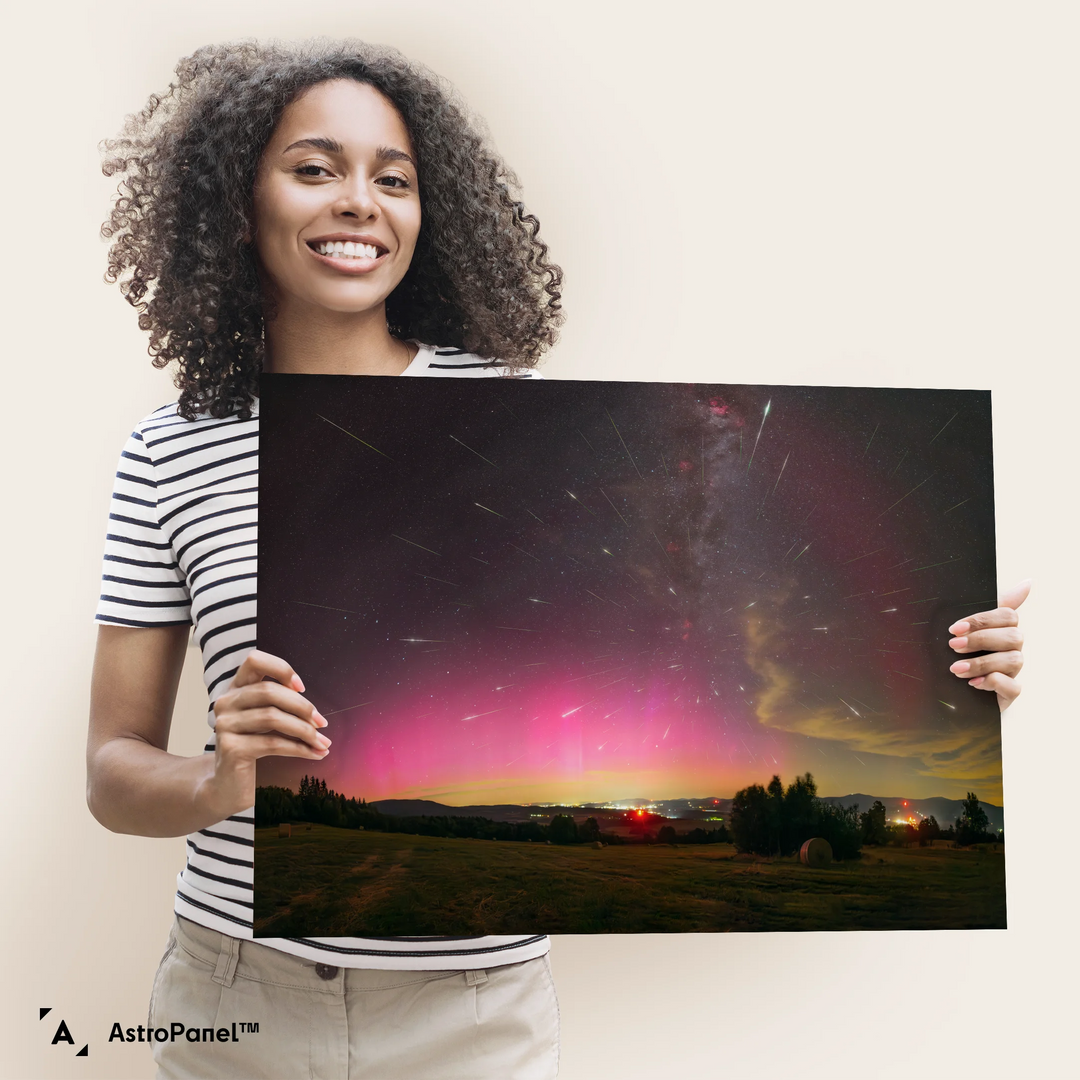
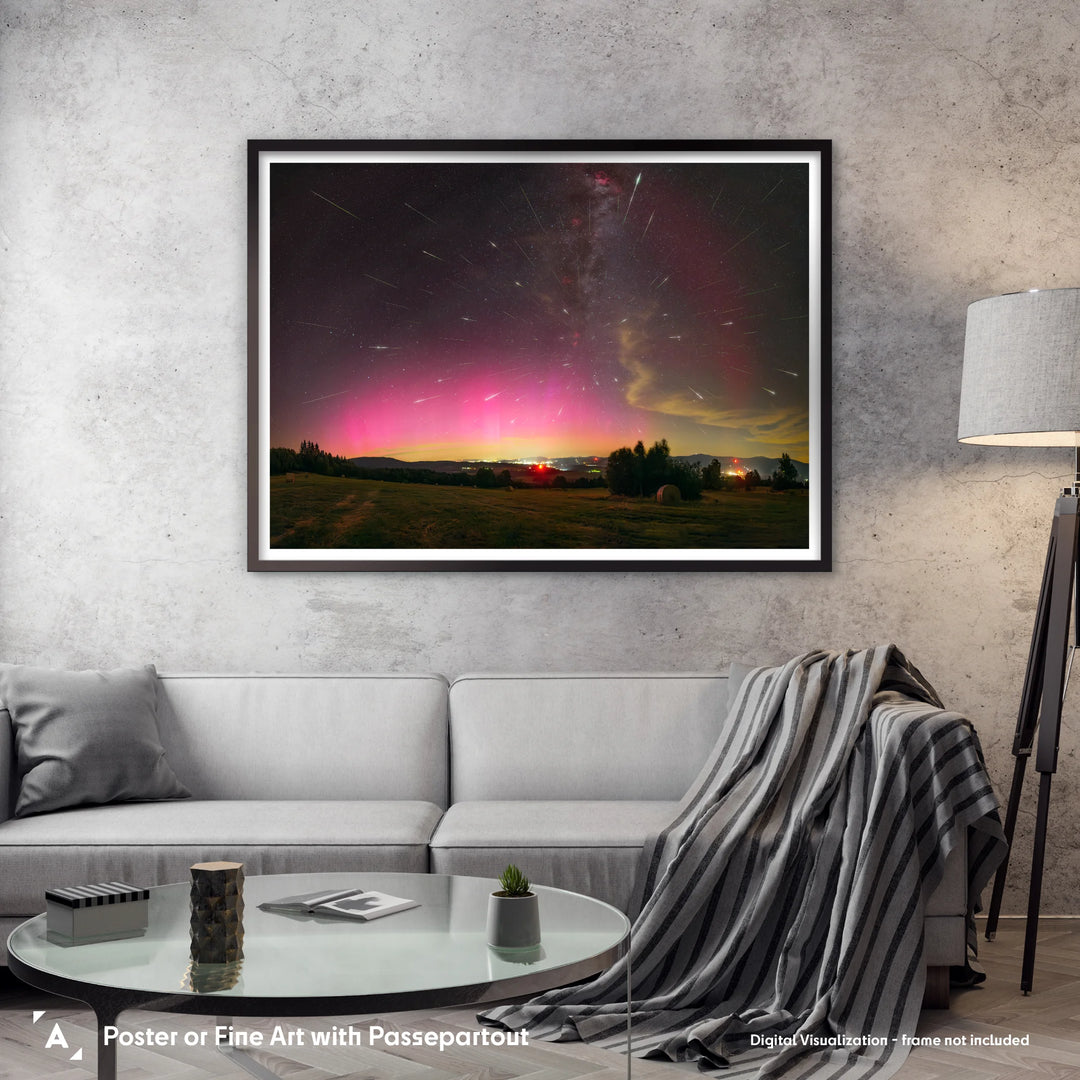
Marzena Rogozińska: Aurora Night of Falling Stars Mosaic
A Cosmic Convergence Captured: Meteors, Aurora, and the Invisible Dance of Earth's Magnetosphere
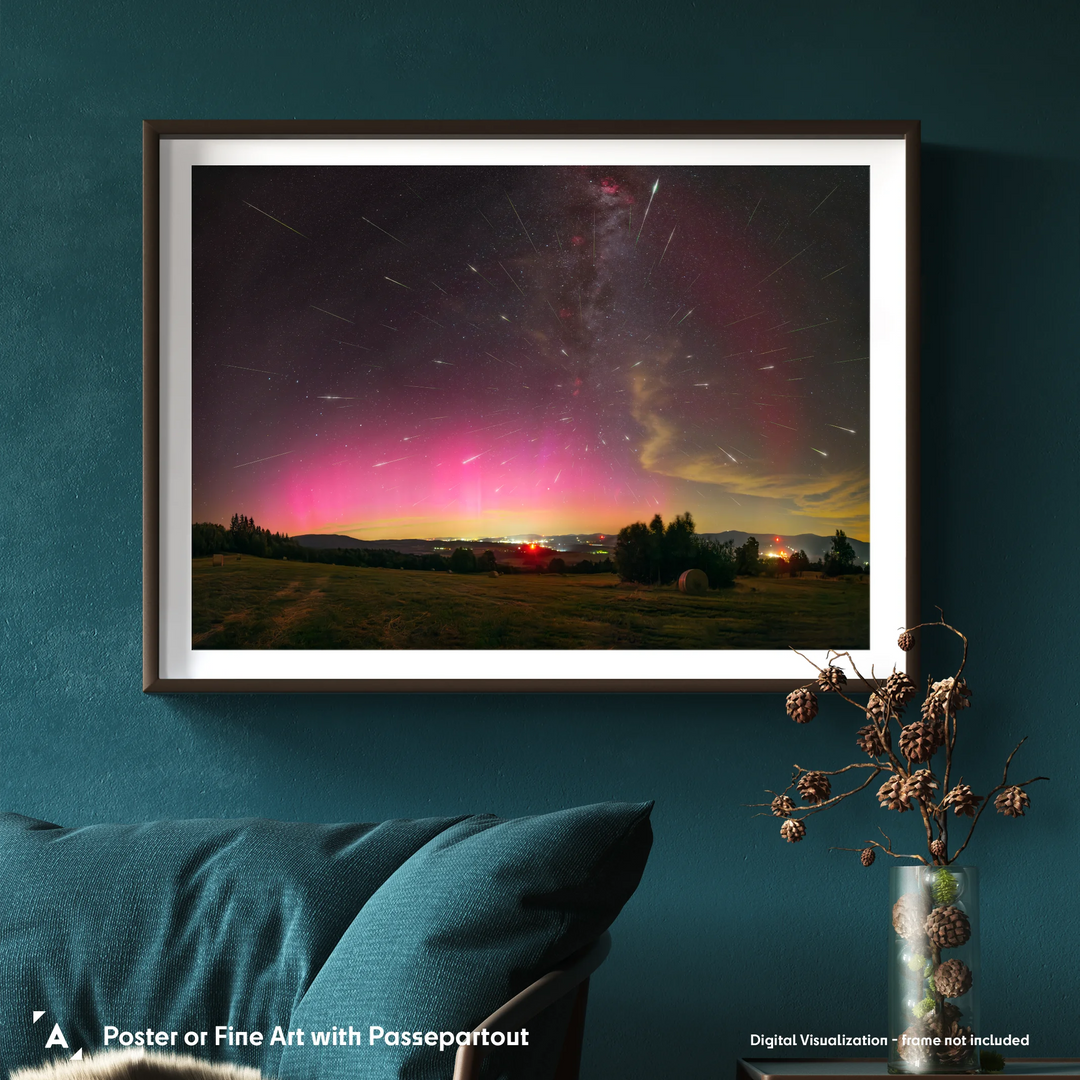
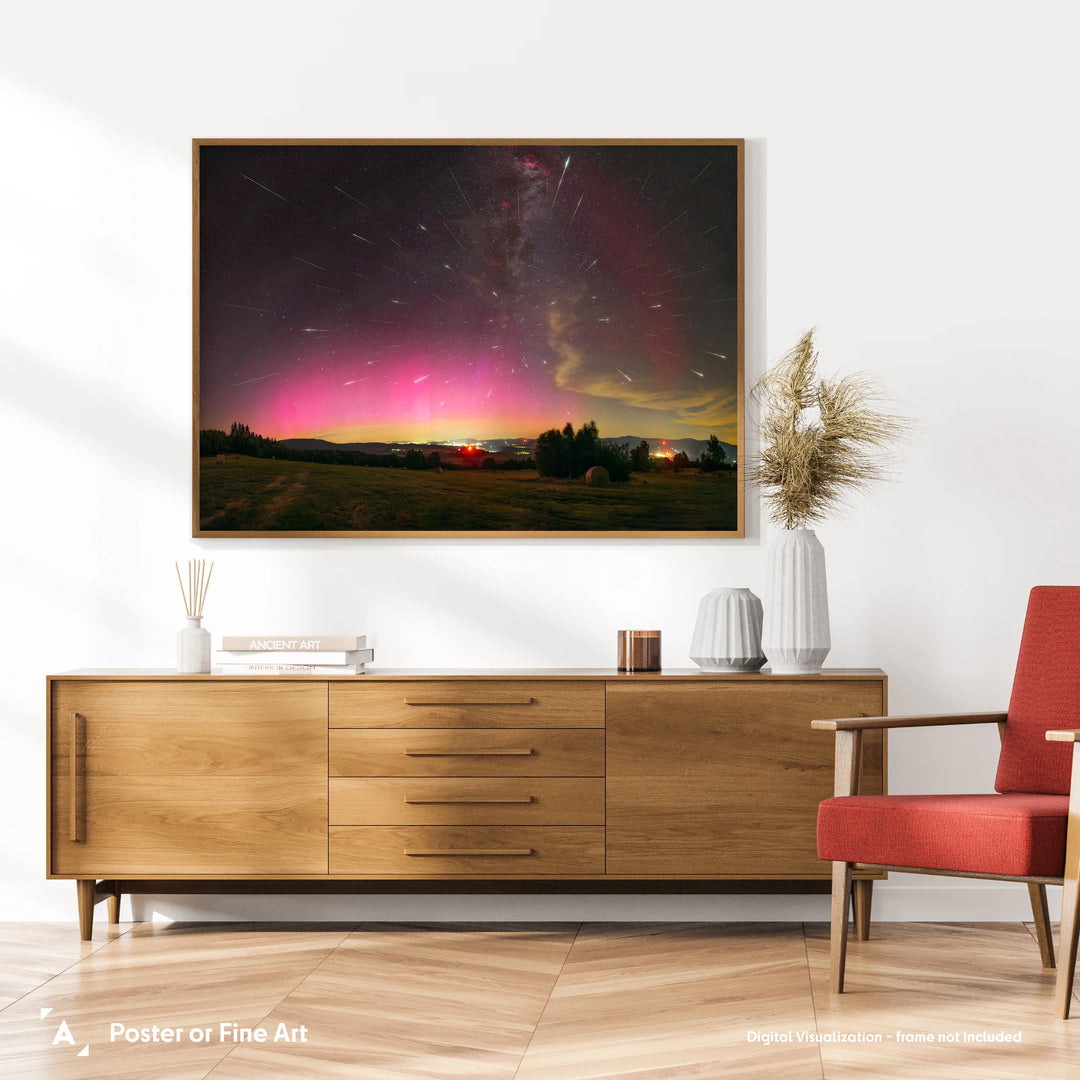
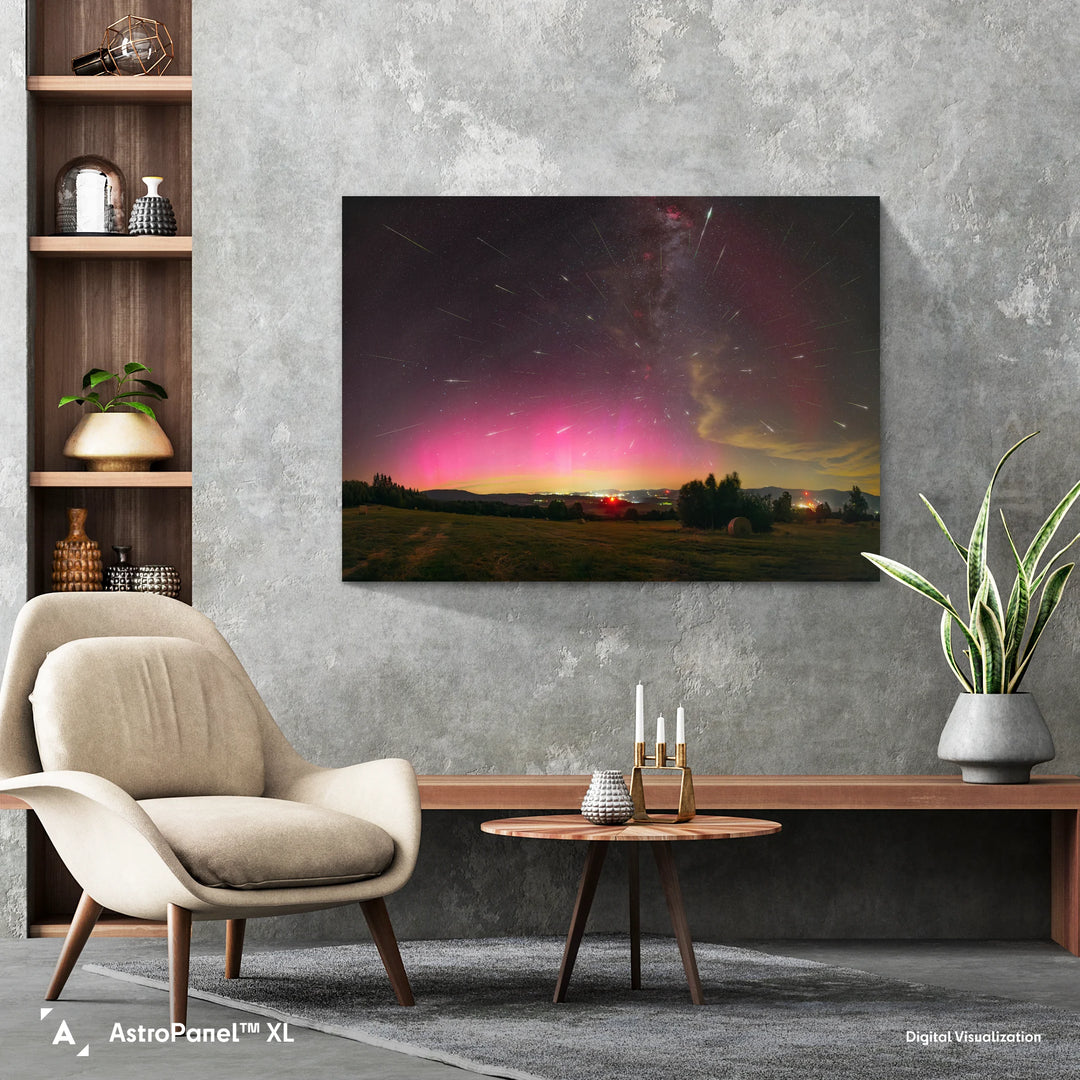
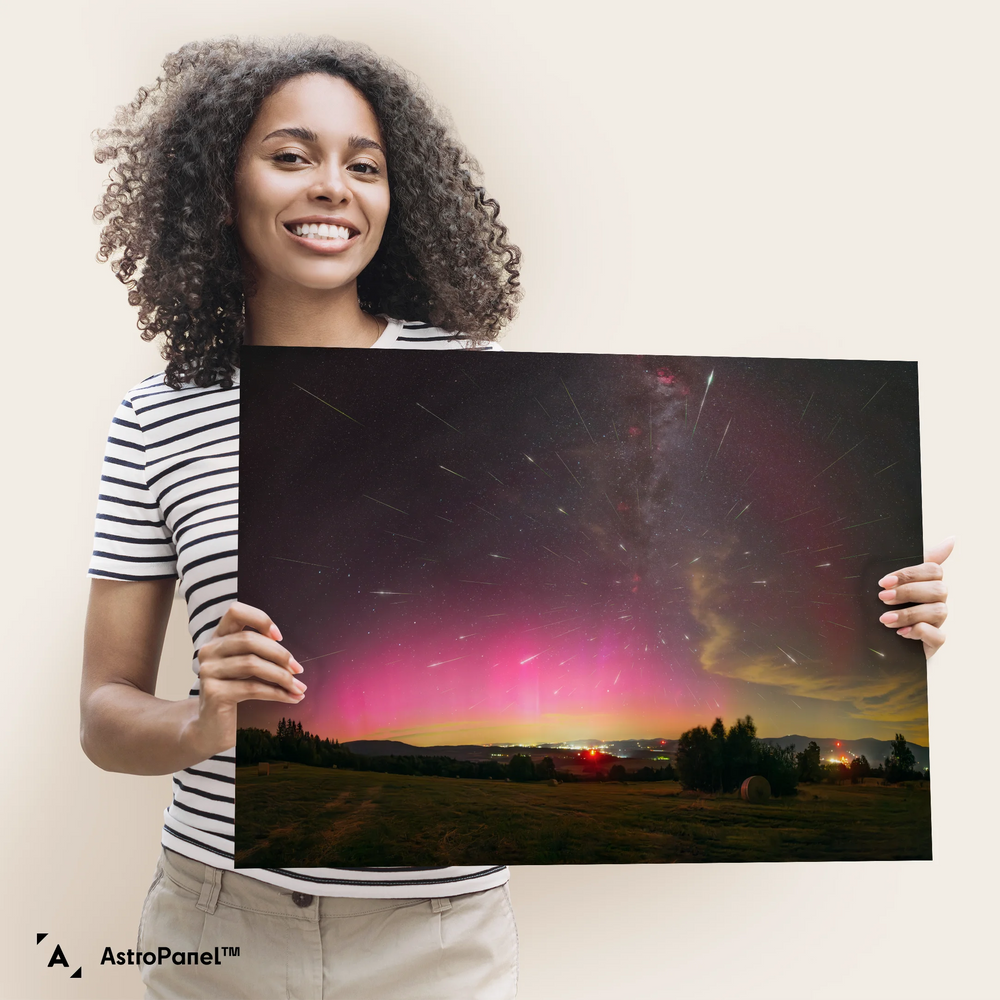
On the night of August 12-13, 2024, the sky over Poland performed a miracle. As the Perseid meteor shower reached its peak—with meteors expected to flash every minute or two across the northern hemisphere—something extraordinary unfolded above the southern Polish landscape near Śnieżnik Mountain. An unexpected aurora borealis, normally confined to the Arctic, suddenly painted the sky in emerald and rose. And beneath it all, a rare, faint red arc whispered across the upper ionosphere: the elusive Stable Auroral Red (SAR) arc, one of the most mysterious phenomena in Earth's atmosphere.
Marzena Rogozińska captured all of it. Not in a single frame, but through an intensive five-night expedition, traveling nearly 1,000 kilometers across Poland in pursuit of dark skies and clarity. The result is a museum-quality mosaic that documents one of the most complete celestial shows ever photographed: meteors, aurora, atmospheric airglow, SAR arcs, and even red sprites—all visible together, all in one unforgettable night.
This is not just a photograph. This is a scientific record. This is poetry written in light.
What You're Actually Seeing: A Masterclass in Cosmic Phenomena
The Perseid Meteors – Dust from an Ancient Comet
The streaks of light radiating across the sky are Perseid meteors. These are tiny fragments—many no larger than grains of sand—from Comet Swift-Tuttle, which orbits the Sun approximately once every 133 years. As Earth passes through this cloud of cosmic debris each August, particles enter our atmosphere at 214,365 kilometers per hour, ionizing air molecules and creating brilliant trails of light.
On the night of August 12, 2024, the Perseid shower reached its absolute peak at 14:00 UTC on August 12, meaning observers that evening and into the early hours of August 13 witnessed one of the year's most spectacular meteor displays—with rates approaching 100+ meteors per hour under ideal conditions.
The Aurora Borealis Over Poland – An Unexpected Visitor
Aurora is not supposed to light southern Poland. Normally confined to high latitudes near the Arctic Circle, auroras require exceptionally powerful geomagnetic storms to extend their reach southward. Yet on August 12-13, 2024, one of the strongest geomagnetic storms in recent years brought auroras visible to the naked eye across Central Europe, as far south as Warsaw and beyond.
This occurred because a coronal mass ejection (CME) from the Sun compressed Earth's magnetosphere, allowing charged solar particles to rain down into the upper atmosphere. When these high-energy particles collide with oxygen and nitrogen molecules at altitudes of 100–300 km, they trigger the characteristic green and pink glows of the aurora.
The pink and green arcs you see in Marzena's image are oxygen and nitrogen atoms in different energy states—excited, glowing, dancing in the solar wind's energy.
The Stable Auroral Red Arc (SAR) – The Rarest of the Rare
Above the classical aurora, Marzena captured something even more elusive: a Stable Auroral Red (SAR) arc. Despite its misleading name, a SAR arc is neither particularly stable nor an aurora in the classical sense.
Instead, SAR arcs are optical signatures of Earth's ring current system—a donut-shaped band of electric current flowing around our planet at tens of thousands of kilometers altitude. During geomagnetic storms, this ring current becomes "pumped" with energy from the solar wind. That energy leaks into the upper atmosphere, superheating oxygen molecules to thousands of Kelvin. The oxygen emits light at a very specific wavelength: 630 nanometers, producing that distinctive deep red glow.
Normally, SAR arcs are invisible to human eyes—too faint, too dim, and our eyes are poorly tuned to red wavelengths. Yet during powerful geomagnetic storms, they brighten dramatically enough to be photographed and, occasionally, seen with the naked eye.
Marzena captured a faint SAR arc—one of the most difficult atmospheric phenomena to image—in the upper reaches of the sky. This speaks to both the exceptional conditions that night and her mastery of astrophotography.
Red Sprites: Electrical Discharges in the Upper Atmosphere
Perhaps most astonishingly, Marzena noted that red sprites—even rarer transient electrical discharges that occur above distant thunderstorms at altitudes of 50–90 km—were briefly visible to the naked eye that night. Red sprites are fleeting, often lasting mere milliseconds, and visible only during the darkest nights from the clearest locations[source from user data]. They appear as jagged, branching red streaks above storm systems, caused by electrical discharges propagating upward into the mesosphere.
For these to be visible—especially to the naked eye—requires both an exceptionally dark location and an exceptionally active night. Marzena was in the right place at the right time.
The Making of a Masterpiece: 60 Hours, 1,000 Kilometers, 14,000 Frames
Capturing this image was a quest unto itself. From August 8–13, 2024, Marzena and her team traveled approximately 1,000 kilometers across Polish dark-sky sites, chasing clear skies and ideal atmospheric conditions. They positioned five imaging setups—including Canon R and Canon 6D cameras paired with Samyang wide-angle lenses—to capture meteors and aurora from multiple perspectives.
Over these five nights, the team captured more than 14,000 individual frames. Yet only approximately 150 images were selected for the final mosaic—each one positioned precisely in the composition to tell the story of that night's celestial symphony.
The assembly and processing required nearly 60 hours of meticulous work in Photoshop, PixInsight, and Alignment Project (APP). Each frame had to be geometrically aligned, color-balanced, and seamlessly blended to create the final panorama—a technical and artistic achievement of the highest caliber.
The result: an image so rare, so scientifically significant, and so visually powerful that it was recognized as Image of the Day on AstroBin and selected for AAPOD2 (Astrophoto of the Day Professionals 2).
Technical Details
- Date & Location: August 2024, Poland
- Site: Viewpoint, southern Poland
- Cameras: Canon R, Canon 6D
- Lenses: Samyang 35mm, Samyang 24mm, Samyang 14mm, Canon RF 15–35mm, Sigma Art 28mm
- Exposure: Multiple exposure mosaic (5 nights)
- Software: Photoshop, Pixinsight, APP
Awards
- Image Of The Day (IOTD) – AstroBin
- AAPOD2
Who This Print Is Perfect For
-
Science lovers and researchers fascinated by space weather and atmospheric physics
-
Art collectors seeking pieces that merge cutting-edge science with visual poetry
-
Astronomy enthusiasts who understand the rarity and significance of this convergence
-
Educators and institutions looking for powerful visual teaching tools about Earth's magnetosphere
-
Those who dream big about what the night sky reveals to those patient enough to watch
-
Gift seekers searching for something truly, unforgettably meaningful
Museum-Grade Fine Art Meets Budget-Friendly Access
At Astrography, this extraordinary image is available in two formats to suit your vision and your means:
Fine Art Print – For Permanent Collections
-
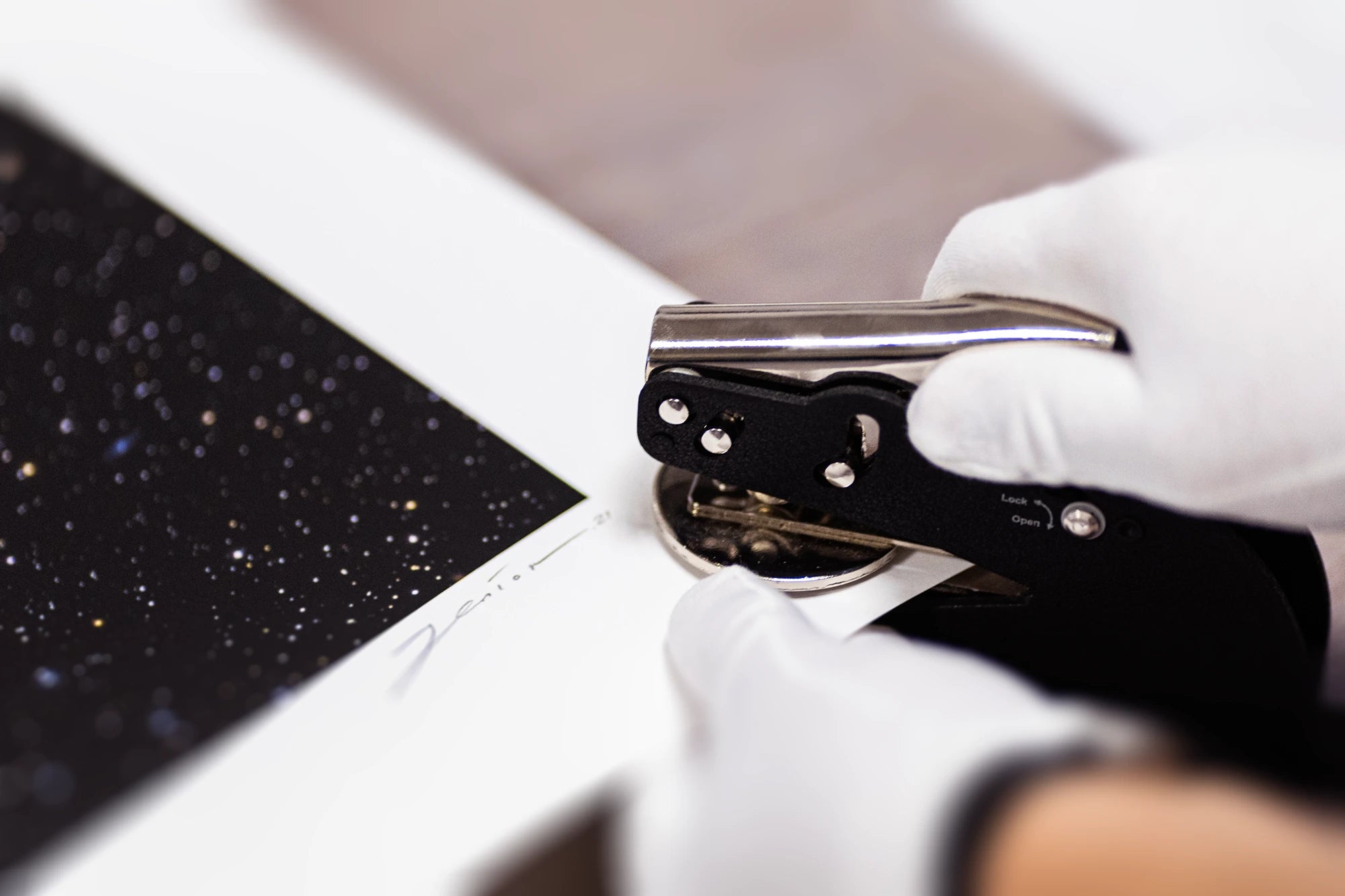
Giclée printed on premium archival matte paper with pigment-based inks, designed to preserve detail and color for 200+ years without noticeable fading
- Exceptional shadow detail, smooth color gradations, and deep blacks—the way museum curators and galleries present art
- Ideal for collectors who want a museum-quality centerpiece for their home, office, or institution
Poster – High-Impact, Budget-Conscious Beauty
-
High-quality eco-solvent poster on durable 200 gsm satin paper—affordable without compromise on visual impact
- Perfect for living rooms, studios, offices, dormitories, and anyone who wants this cosmic story accessible now
- A great choice if you want the universe on your wall without a premium price tag
All Astrography prints are custom-made to order, printed with cutting-edge technology, and shipped globally in protective tubes.
Bring This Cosmic Convergence Into Your Life
One sky. One moment when Earth's atmosphere, our magnetosphere, our solar system's dust, and the Sun's fury all aligned for observers patient and fortunate enough to witness it.
Choose your medium—Fine Art or Poster—select your size, and add "Aurora Night of Falling Stars Mosaic" to your cart today.
Every time you look at it, you'll be standing beneath that Polish sky again, watching meteors streak, auroras dance, and the invisible forces that shape our planet's interaction with the cosmos paint themselves in light.
👉 Own the night that nature delivered one of its greatest performances. Order your print now.









![4 Incredible Space Posters and Wall Art for Man’s Cave [Inspirations]](http://astrography.com/cdn/shop/articles/mans-cave-2-16x9-1.webp?v=1771508410&width=1080)