Space is often viewed as static and silent, but the James Webb Space Telescope reveals that it is alive with movement. You are looking at a gravitational dance between two dwarf galaxies, NGC 4490 and NGC 4485, captured in unprecedented detail.
Right now, 24 million light-years away in the constellation Canes Venatici, two dwarf galaxies are finishing a cosmic embrace that began long before dinosaurs walked the Earth. NGC 4490, the larger dancer, pirouettes through space. NGC 4485, its smaller companion, trails a luminous ribbon of gas—a bridge forged by gravity itself, connecting two island universes in an intimate gravitational waltz.
And James Webb just captured the entire choreography.
Roughly 200 million years ago, these two celestial bodies whirled past one another. The larger galaxy, NGC 4490, ensnared a stream of gas from its smaller partner, creating a wispy, glowing bridge that now connects them like dancers holding hands. This isn't just a collision; it is creation. The bright blue regions you see are bursts of new star formation, sparked by this violent yet beautiful encounter.
Why This Print Belongs in Your Collection
At Astrography, we reject the generic. We curate the universe. We selected this specific image because it acts as a time machine.
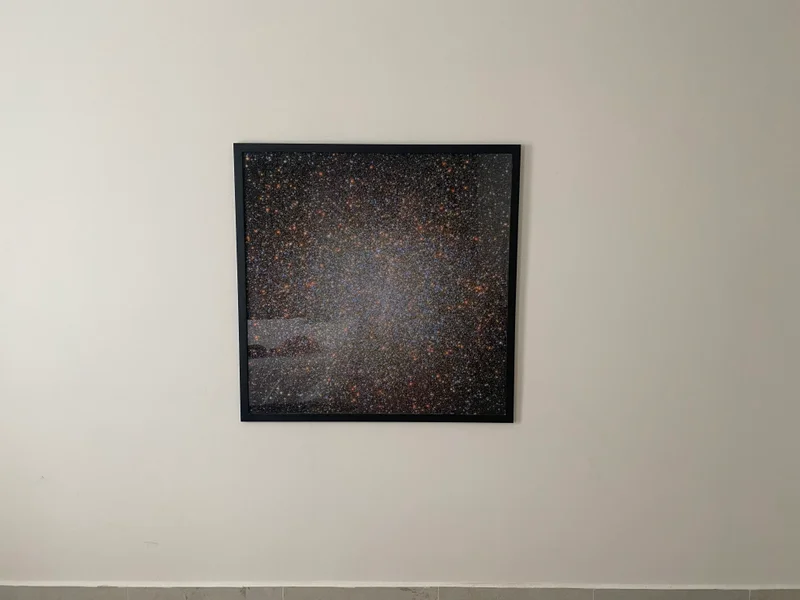
Dwarf galaxies like these are chemically similar to the young galaxies of the early Universe. By hanging this print on your wall, you aren't just displaying a pretty picture; you are displaying a simulation of how the cosmos looked billions of years ago. The vibrant reds of the gas bridge and the piercing blues of ionized star clusters create a stunning visual contrast that demands attention.
The Desire Recognition
Most people look up at the night sky and feel small. But you? You feel connected. You wonder about the mechanics beneath the beauty. You want to understand how things move, how they interact, how the universe works at the most fundamental level.
Your space should reflect that hunger for truth. Not generic astronomy. Not mass-market stars. But authentic revelation—the kind that stops someone mid-thought and makes them say: "Wait. What am I actually looking at?"
That's the difference between a poster and a window.

Who is this print for?
-
Art Collectors: Those seeking limited-run aesthetics with a story that spans millions of years.
-
Space & Science Lovers: Enthusiasts who want to analyze the "gas bridge" and resolved stellar populations revealed by Webb’s NIRCam and MIRI instruments.
-
Interior Designers: Professionals looking for a panoramic, horizontal piece with deep reds and blacks to anchor a modern living space or office.
-
People who want to furnish an original space: For those who want their walls to open a window into the deep universe rather than displaying mass-market decor.
-
Gift Seekers: The perfect offering for the person who looks up at the stars and wonders "how did we get here?"
Museum-Grade Quality & Longevity
-
The Curator's Eye: We process raw data to bring out the narrative of the image, ensuring the contrast and color fidelity honor the science.
-
Archival Excellence: Choose our Fine Art option for giclée prints on acid-free paper, rated to last over 200 years. This is the same quality found in top-tier galleries.
-
Accessible Beauty: We also offer a premium Poster version for a budget-friendly way to dramatically alter the mood of your room.
Capture the dance of creation. Bring the cosmos home.


 Collected by this store· 0 found this helpful