1 / 1

Print Artwork · NASA · December 2025

JWST: A Glimpse of the Distant Past

★★★★★ 4.9/5 · 694 reviews 40,000+ collectors in 70 countries

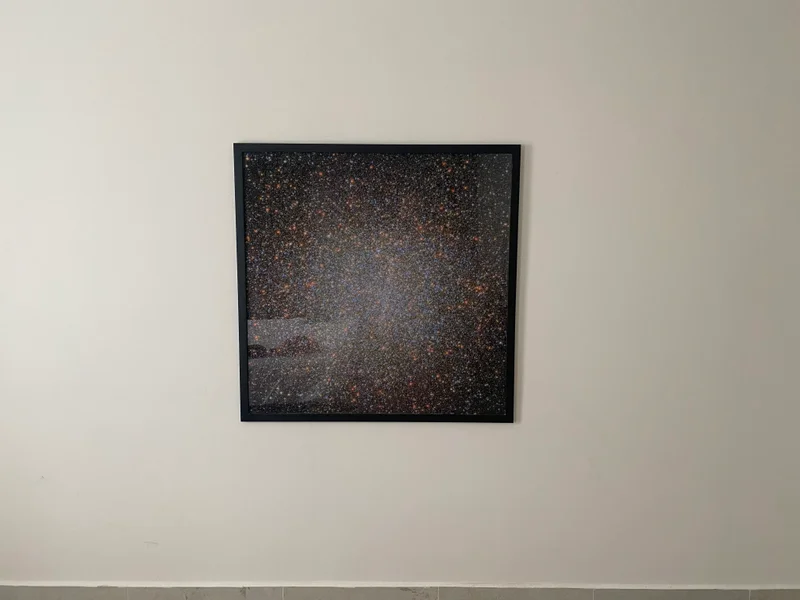
The eye is first drawn, in this new NASA/ESA/CSA James Webb Space Telescope Picture of the Month, to the central mega-monster that is galaxy cluster Abell S1063. This behemoth collection of galaxies, lying 4.5 billion light-years from Earth in the constellation Grus (the Crane), dominates the scene. Looking more closely, this dense collection of heavy galaxies is surrounded by glowing streaks of light, and these warped arcs are the true object of scientists’ interest: faint galaxies from the Universe’s distant past.

Size
$55Fine Art · 28″ × 28″
  • Original photography, faithfully remastered
  • Gallery-grade pigment printing, colour-calibrated in studio
  • Every print inspected by hand before it ships
  • Fits standard US frames
Ships to the USA in 5–9 days · Tracked · No surprise customs charges
30-day returns
no questions asked
Damage replacement
free, no return needed
Secure checkout
cards · PayPal · Apple Pay
What’s in the box

Your print, rolled in a rigid protective tube with acid-free tissue. Frame not included — sizes match standard frames, so you can hang it the day it arrives.

Shipping & delivery

Made to order in 2–4 business days, then shipped fully tracked. Typical door-to-door time to the USA: 5–9 business days. Shipping is calculated at checkout — and there are never surprise customs or import charges on top.

30-day money-back guarantee

Hang it, live with it, decide slowly. If it doesn’t make the wall better, send it back within 30 days for a full refund — no questions asked. Damaged or misprinted prints are replaced free, no return needed.

Product details

Poster: premium 200 gsm semi-gloss stock with vivid contrast. Fine Art: museum-grade cotton matte paper with archival pigment inks rated for 100+ years. Both are printed from the same remastered file on calibrated pigment printers and inspected by hand before shipping.

Fast, tracked delivery
At your door in 5–9 days
30 days to love it
Easy returns, no questions asked
Arrives perfect, or replaced
Damage replacement — even after unboxing
Handcrafted, made to order
Independent EU studio since 2018
Why this photograph matters

The story behind JWST: A Glimpse of the Distant Past

The eye is first drawn, in this new NASA/ESA/CSA James Webb Space Telescope Picture of the Month, to the central mega-monster that is galaxy cluster Abell S1063. This behemoth collection of galaxies, lying 4.5 billion light-years from Earth in the constellation Grus (the Crane), dominates the scene. Looking more closely, this dense collection of heavy galaxies is surrounded by glowing streaks of light, and these warped arcs are the true object of scientists’ interest: faint galaxies from the Universe’s distant past.

Abell S1063 was previously observed by the NASA/ESA Hubble Space Telescope’s Frontier Fields programme. It is a strong gravitational lens: the galaxy cluster is so massive that the light of distant galaxies aligned behind it is bent around it, creating the warped arcs that we see here. Like a glass lens, it focuses the light from these faraway galaxies. The resulting images, albeit distorted, are both bright and magnified — enough to be observed and studied. This was the aim of Hubble’s observations, using the galaxy cluster as a magnifying glass to investigate the early Universe.

Why this photograph matters

The story behind JWST: A Glimpse of the Distant Past

The eye is first drawn, in this new NASA/ESA/CSA James Webb Space Telescope Picture of the Month, to the central mega-monster that is galaxy cluster Abell S1063. This behemoth collection of galaxies, lying 4.5 billion light-years from Earth in the constellation Grus (the Crane), dominates the scene. Looking more closely, this dense collection of heavy galaxies is surrounded by glowing streaks of light, and these warped arcs are the true object of scientists’ interest: faint galaxies from the Universe’s distant past.

Abell S1063 was previously observed by the NASA/ESA Hubble Space Telescope’s Frontier Fields programme. It is a strong gravitational lens: the galaxy cluster is so massive that the light of distant galaxies aligned behind it is bent around it, creating the warped arcs that we see here. Like a glass lens, it focuses the light from these faraway galaxies. The resulting images, albeit distorted, are both bright and magnified — enough to be observed and studied. This was the aim of Hubble’s observations, using the galaxy cluster as a magnifying glass to investigate the early Universe.

The new imagery from Webb’s Near-Infrared Camera (NIRCam) takes this quest even further back in time. This image showcases an incredible forest of lensing arcs around Abell S1063, which reveal distorted background galaxies at a range of cosmic distances, along with a multitude of faint galaxies and previously unseen features.

This image is what’s known as a deep field — a long exposure of a single area of the sky, collecting as much light as possible to draw out the most faint and distant galaxies that don’t appear in ordinary images. With 9 separate snapshots of different near-infrared wavelengths of light, totalling around 120 hours of observing time and aided by the magnifying effect of gravitational lensing, this is Webb’s deepest gaze on a single target to date. Focusing such observing power on a massive gravitational lens, like Abell S1063, therefore has the potential to reveal some of the very first galaxies formed in the early Universe.

The observing programme that produced this data, GLIMPSE (#3293, PIs: H. Atek & J. Chisholm), aims to probe the period known as Cosmic Dawn, when the Universe was only a few million years old. Studying the galaxies revealed by gravitational lensing has the potential to develop our understanding of the emergence of the first galaxies. Analysis of this NIRCam data by the GLIMPSE team has already produced candidates for galaxies that existed as early as 200 million years after the Big Bang, and hints of the elusive first population of stars in the Universe.

Credit:
ESA/Webb, NASA & CSA, H. Atek, M. Zamani (ESA/Webb)
Acknowledgement: R. Endsley

Poster or Fine Art?

Same remastered file. The paper and the printing technology are the difference.
Poster — Semi-Gloss
from $39
Paper
Premium 200 gsm semi-gloss stock
Printing
High-resolution eco print, colour-calibrated
Look
Vivid contrast, subtle sheen — colours pop under room light
Longevity
Fade-resistant inks for decades of display
Best forFirst print, kids’ rooms, offices
Fine Art — Matte
from $39
Paper
Museum-grade cotton matte paper
Printing
12-colour archival pigment giclée, hand-proofed
Look
Zero glare, deepest blacks — made for the darkness of space
Longevity
Archival pigment inks rated for 100+ years
Best forCollectors, living rooms, gifts — the finish we hang in our own studio

Loved by Thousands

★★★★★ 4.9/5 average from 694 reviews · 40,000+ collectors in 70 countries
★★★★★✓ Verified buyer
Beautiful Space Art

“Astrography are great communicators. The photo is excellent but the presentation is fantastic… I mounted it in a monochrome white and black rimmed frame and it looks great on the wall.”

Mervyn P. · Earthset, Artemis II
★★★★★✓ Verified buyer
Outstanding

“The print is great quality and was packaged with care. Looks great on my wall.”

Brian C. · Galactic Center of Milky Way
★★★★★✓ Verified buyer
Great Quality

“I chose the fine art option for the print… it comes on a thick paper that hangs nicely on the wall. Either way this is a gorgeous print!”

Ross Y. · Stellar Spire in the Eagle Nebula
★★★★★✓ Verified buyer
So Beautiful!

“I am 70 and remember this vividly… I watched the moon landing on my little black and white TV. I have had the photo framed, letting the lettering and seal show.”

Debra B. · Apollo 8 Earthrise Remastered

Questions, answered

Anything else — support@astrography.com, answered the same day.

Is this a real photograph?

Yes. Every image is original photography — NASA, ESA, Hubble and JWST archives, observatory data, or Adam’s own telescopes — faithfully remastered in our studio. Any visible grain is inherent to deep-space photography at extreme distance. We keep it, because it’s part of what makes the image real.

How long does delivery to the USA take?

Every print is made to order in 2–4 business days, then delivered in 3–5 more. Typical door-to-door time: 5–9 business days, fully tracked.

Will I pay customs, duties, or import fees?

No. Shipping is shown and paid at checkout, and after that there are no surprise charges — no customs, duties, or carrier fees on delivery.

Should I choose Poster or Fine Art?

Poster (semi-gloss) is our best-value option with vivid contrast and a subtle sheen. Fine Art (matte) is museum-grade cotton paper with archival pigment inks rated for 100+ years and zero glare — the finish we recommend for space imagery and the one we hang in our own studio.

Is a frame included?

No — your print arrives rolled in a rigid protective tube. All sizes match standard frames, so any off-the-shelf frame fits.

What if it arrives damaged?

We replace damaged or misprinted prints free of charge, no return shipping required.

Can I return it?

Yes — you have 30 days. Hang it, live with it, decide slowly. If it doesn’t make the wall better, send it back for a full refund, no questions asked.

Join 40,000 space lovers. Get 20% off your first print.
Launch news, new releases, no spam.